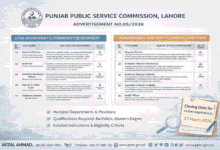
Not long ago, Punjab’s government stepped up its push to strengthen healthcare and help more people live better lives statewide. Job seekers now have a chance through openings just listed by the Health & Population Department – these spots sit in Lahore, set for 2026. A notice placed March 10 in the Express Tribune revealed one such role: Visiting Faculty based in Johar Town. That post caught attention fast, drawing eyes from grads and seasoned workers alike. Many see it as a path that ties teaching work with serving communities, building skills without leaving public service behind.
This piece walks through the job opening, who can apply, how to submit your details, why these positions matter for improving healthcare across Pakistan. A closer look shows what it takes to join, steps to follow when applying, impact on medical services nationwide. Getting into this role means meeting specific criteria, sending documents correctly, understanding its value in public health progress. Each part explains necessary qualifications, method to sign up, contribution toward better hospitals and clinics. Details unfold around access rules, procedure to enroll, effect on patient care systems. What lies behind is clarity on standards needed, way to send forms, support given to medicine delivery networks.
Health and Population Department Overview
A single office inside Punjab’s government handles medical care, people numbers, and wellness rules. This group exists so everyone can reach good treatment without high cost. Running efforts that help mothers and kids comes first for them now. Instead of waiting, they act early through teaching about illness control. Their work includes birth spacing advice plus spreading facts about staying well.
Every now and then, fresh voices join the team – visiting experts who bring real-world insight into classrooms. Because these scholars step in, courses on health systems, community wellness, and how populations stay healthy grow sharper. Without their presence, gaps might form where experience should be. When seasoned practitioners teach, students see beyond textbooks. Real problems meet real thinking. Training shifts from theory to something closer to practice. The goal isn’t just knowledge – it’s readiness. Facing today’s complex care demands takes more than lectures. It takes exposure. These temporary roles shape lasting capability. Stronger programs emerge when outside minds move through them.
Visiting Faculty Role
A role opens up now and then – Visiting Faculty – not just about leading classes but guiding students, lending insight where it’s needed most. These educators step in from outside, bringing real-world know-how into classrooms for a set stretch of time. Their presence fills gaps, shares fresh views, shapes learning beyond the usual routine.
From time to time, these roles open doors for people with different training and work histories to pass along real-world insights. Those involved often bring classroom learning to life while working alongside learners, apprentices, or medical staff. What stands out is how varied careers can shape teaching in quiet but meaningful ways.
The role of visiting faculty may include:
Delivering lectures and academic sessions
Conducting workshops and training programs
Supervising research projects
Providing professional guidance to students and trainees
Supporting curriculum development related to health and population studies
Besides teaching, guest instructors help lift standards in healthcare education by sharing real-world experience. Their presence brings fresh insight into classroom learning, shaping better-trained professionals over time.
Job Location
Located in Johar Town, Lahore, the role sits in a busy part of the city filled with schools and homes. Known across Pakistan for its strong education system and government functions, Lahore offers solid ground for growing careers and learning.
Lahore opens doors to up-to-date labs, schools, clinics, besides centers focused on study. In this setting, fresh ideas grow through teamwork across medicine and education.
Educational Requirement’s
A background in managements could work too, if it tie’s into the bigger picture. The focus leans toward degrees that connect with how communities stay healthy. Fields outside these might still fit, so long as they’re close enough.
Possessing a higher-level degree could help some applicants stand out. Those familiar with how medical services operate might catch attention more easily. Expertise in study design sometimes makes a difference when choices are made. People trained in ways of instructing others often seem stronger on paper.
Skills and Competencies Needed
Out there, hands-on practice carries weight equal to paper credentials. Teaching work makes a difference, especially when it happens beyond school walls. Clear speaking skills pop up again and again across job outlines. Those who have guided groups or steered assignments usually catch attention faster. Awards from within the field can substitute for degrees in certain cases. When you keep moving in your area of work, things shift. Hiring teams often lean toward people who adjust fast after starting.
1. Strong Communication Skills
The words come through best when they are easy to follow. What works one day may fall flat the next – timing shifts things. A look can say more than a full sentence ever could. How you hear someone often shapes how they speak back. Not rushing lets meaning settle where it should.
2. Teaching and Training Experience
Folks who’ve taught before tend to stand out, since their background helps them dive into school initiatives without much ramp-up. A classroom past means they’re ready to shape lessons right away, fitting smoothly into learning environments.
3. Research Knowledge
Now imagine someone digging into patterns of illness across cities. Those who know how studies work often help learners spot trends others miss. Some teachers bring that skill into talks about rules shaped by numbers.
4. Professional Expertise
The People from NGOs or government roles often understand challenges most textbooks miss. Real-life work in these fields shapes how they teach and share knowledge. Their background helps bridge theory with what actually happens on the ground. Having walked through tough situations, they offer perspectives that matter. These individuals connect classroom ideas to actual community needs.
Application Process
Those who want to apply need to check the official ad for directions. Usually, it goes like this – first step comes before what follows next
Take a look at the job posting published by the organization
Reading the full ad matters most – check it in print or online. Every detail counts when figuring out what’s needed.
Passport-size photographs
Submit the Application
Start off by checking how the ad says to apply. Sometimes you mail your papers, sometimes there is a website instead. Follow what it tells you, step by step.
Observe the Deadline
Applications likely close near March 31, 2026 – yet each person must check the precise date listed in the official posting. What matters most sits there, not here.
Failing to send it on time means missing out – most offices toss delayed forms aside. What counts? Getting there early.
Visiting Faculty Roles in Health Care
When guest teachers join, they link classroom lessons with hands-on know-how. Real-life skills matter a lot – especially in health care and managing community needs. Experience shapes how well ideas work outside textbooks.
Some key benefits of visiting faculty programs include.
Knowledge Sharing When people trained in separate fields share what they know, classroom ideas grow wider. A historian might see patterns a scientist overlooks. Skills shaped by real work add depth to theory. Perspectives clash, then clarify. Learning widens when life stories enter the room.
Skill Development
Learning real-world skills helps students get ready for work. Alongside classroom lessons, they see how today’s health systems operate. Through hands-on experience, they begin understanding workplace demands. Exposure to current methods shapes their readiness for future roles.
Networking Opportunities
Folks on the faculty team up with schools, public agencies, health services – linking them in practical ways. Sometimes it starts with a meeting, often grows through shared goals, always relies on trust built slowly over time.
Improved Healthcare Training
Stronger skills among medical staff slowly build stronger care systems over time. When workers learn more, patients feel the difference without noticing why. Knowledge spreads through clinics like quiet rain. People stay healthier when those who treat them know better ways. Growth in one place lifts outcomes everywhere nearby.
Career Advantages for Job Seekers
Teaching part time opens doors in surprising ways. Professionals often find fresh energy through classroom engagement. A change of scenery sometimes brings renewed passion for their field. Those who share knowledge gain perspective too. Experience outside academia adds depth when guiding students. Many enjoy connecting ideas across different worlds. Flexibility lets them balance multiple interests at once. Exposure to new research keeps thinking sharp. Unexpected conversations spark original thoughts now and then
Help shape how health services grow across the country
Experience working with government institutions
Awarded honors through work well done. School projects opened doors to new chances.
Networking with healthcare experts and policymakers
Enhancement of teaching and research experience
This job might just open doors for fresh graduates or seasoned scholars who want to grow while giving back. Career moves like this one often come around when least expected.
Career Opportunity Through Visiting Faculty Role
A door opens when experience meets purpose – skilled individuals now have a path through the Health & Population Department’s visiting faculty role. Entry stretches from bachelor-holders to those with advanced degrees, pulling in diverse minds. Teaching draws them, research holds their interest, serving communities keeps them engaged. Each brings something different; each fits. This isn’t just placement – it shapes how health and population efforts grow across Pakistan.
Application Details and Long-Term Impact
A look at the full job notice in the Express Tribune from March 10, 2026 is worth your time if you plan to apply. Meeting the likely cutoff – March 31, 2026 – keeps things on track. Landing this position opens doors professionally while contributing directly to Punjab’s health system. Success here means growth, yet it also ties into broader community impact through service.
Through these chances, the push for better schools, medical learning, and support systems becomes clear – each step feeding into wider public good. A stronger foundation grows where leadership focuses on people’s real needs, slowly shaping a healthier society overall.
FAQ’s
1. Health & Population Department Lahore Announces New Position?
A spot opens up in 2026 at Johar Town, Lahore – Health & Population Department calling for skilled applicants. Teaching experience. They’re looking. Location matters here. Qualified individuals should take note. This role involves visiting duties only. Applications accepted ahead of the start date.
2. Job location – where exactly is it?
Over by Johar Town in Lahore sits the workplace, right where schools and offices cluster tightly together.
3. Last day you can send your application for this role – what’s it?
Last chance to submit arrives by 31 March 2026 – unless the official posting states an earlier cutoff. Applications must arrive before that point.
4. How can candidates apply for this position?
Those who want to apply must go through the full ad carefully, then send in their forms together with needed papers as outlined in the official announcement. What follows is based on what’s written there.