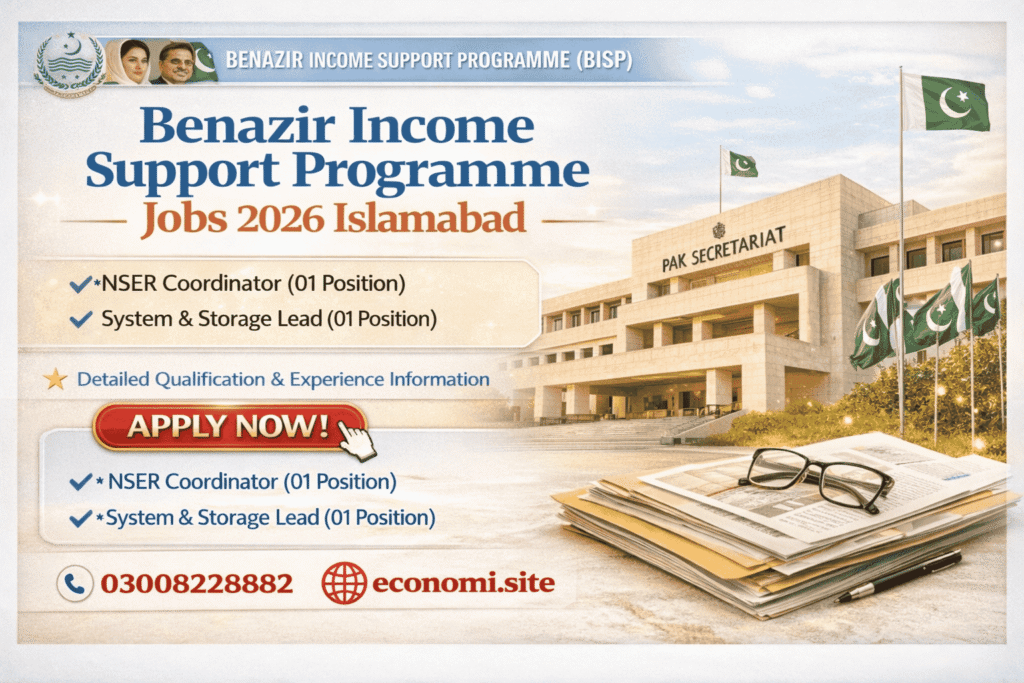
Fresh job spots just popped up through the Benazir Income Support Programme, set for 2026 in Islamabad – geared toward skilled folks with strong backgrounds in tech and leadership. Behind this push? A need to boost how well BISP handles its internal structure, especially when it comes to managing data, running IT setups, and keeping track of social and economic records. Anyone packing a bachelor’s, master’s, or similar qualification might find this a solid step forward – working within a recognized national government body opens doors.
About BISP
BISP runs under Pakistan’s government, built to ease hardship by sending money straight to struggling homes. From its base in Islamabad, the program reaches families every three months with support that focuses on women. Instead of complex rules, it uses straightforward access points like Benazir Kafaalat and education incentives named after Benazir. Across regions, digital tools check who qualifies – using data from a national registry tied to living conditions. Coverage spreads everywhere, powered by real-time checks and steady outreach.
Known mostly for handing out money aid and helping people stay safe, this program quietly hires experts too – those who build systems, track results, study problems, plus guide internal growth. Its 2026 job push stands out lately, aiming straight at tech-savvy talent ready to shape digital shifts and manage information wisely.
2026 BISP Jobs in Islamabad
Right now, a fresh post on the BISP website shows new job openings tied to the 2026 hiring plan. These roles stand out as central picks in their latest update.
1. Lead Data Scientist One Opening
Picture someone deep in numbers, shaping how decisions get made at BISP through clear findings from complex data. This person dives into patterns, builds forecasts, yet stays grounded in real programme needs. Close collaboration happens naturally – project leads, tech staff, and evaluation experts all connect through shared understanding. Insight flows not from isolated reports but from constant back‑and‑forth between analysis and field reality. Strategy shifts because of what the data quietly insists on. Behind every model stands a purpose: making choices clearer when lives are shaped by them.
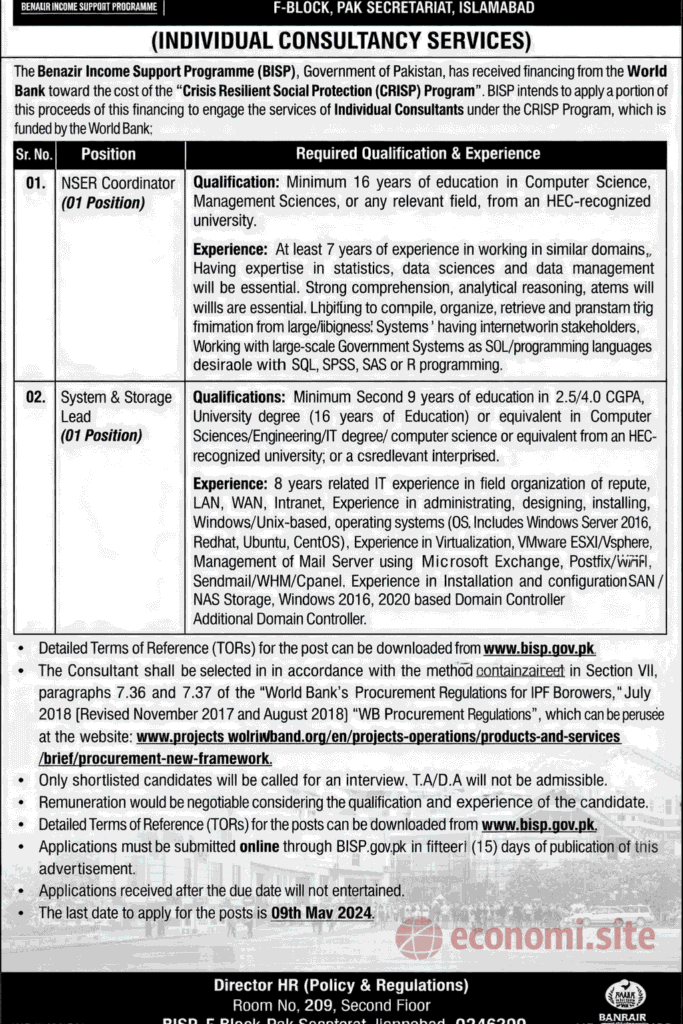
2. System and Storage Lead One Position
Overseeing tech direction means handling big company systems – servers, places to keep data, plus how networks run day to day. Running system and storage work involves shaping setups, putting them live, then keeping machines running so projects move without hiccups. Anyone stepping into this job should know their way around Windows environments just as well as Unix ones, handle virtual machines with ease, while managing wide-reaching network tasks smoothly.
3. Payment Specialist II UCT One Position
A single task keeps moving – managing digital payments while linking arms across finance hubs so money reaches people on schedule every three months. Handling how payouts work means knowing tech inside out plus talking regularly with lenders, startup-tech allies, and BISP’s own budget teams.
4. NSER Coordinator One Position
One more thing mentioned in the 2026 job ad: they’re looking for an NSER Coordinator. What matters here is keeping social registry details accurate, so records stay trustworthy over time. Working alongside teams on the ground helps keep household info current through regular checks. Behind that effort needs to be someone skilled at handling databases, digging into numbers, plus understanding how sectors function.
Educational Qualifications
A solid sixteen years of schooling sits at the base – think bachelor’s or master’s level – earned through a college that HEC actually acknowledges. Schooling like this does not count unless the national commission gives it a nod. Degrees must come from places on their approved list, nothing off the edge. Four full years beyond high school form the floor, sometimes more. The path matters just as much as the paper in hand.
Those applying for technical jobs might have studied subjects like Computer Science or Engineering. A background in IT or data-focused programs can fit the requirement just as well. Sometimes degrees in Management Sciences open doors too. Fields tied closely to tech work often count. Academic paths that mix analysis with systems tend to line up here.
A solid track record on real projects often matters more when hiring for tech jobs like data work or systems engineering. Credentials help, yet practical skill’s tend to stand out just as much.
Experience Requirements
Barring entry-level jobs, nearly every position needs
A handful of years – say, seven up to a dozen or more – spent doing similar work.
A solid track record shows deep knowledge in tech areas like managing networks, handling servers, also keeping databases running smoothly.
Finding clear ways to share ideas matters a lot when organizing tasks or handling information. Thinking through details step by step helps make sense of numbers and patterns. Putting thoughts into written reports becomes easier with practice. What stands out is how smoothly one can link facts and conclusions. These abilities show up often in jobs that track progress or manage schedules.
People who’ve worked on government initiatives might find things easier here. Those familiar with global aid efforts could fit well too. Anyone used to big agencies may stand out more.
Application Process
Start by visiting BISP’s website to find the careers section. Usually, that is where job openings show up. Next comes filling out a form with your details. After typing everything in, check it once more before sending. Most times, submissions go through only if done online. Each step matters just as much as the last one
Head over to bisp.gov.pk for the official site.
Head over to where they list jobs. Look for the part marked Careers or Jobs.
Start by locating the correct job posting online. Once found, save a copy of the Terms of Reference file directly to your device. Access often opens after clicking through the listing details.
Start by filling out the web form. Then add your latest resume along with any required files. Submit everything once it is ready.
Ahead of the deadline, send in your form. Before time runs out, get your submission in. The last day looms – your paperwork must be there by then.
Mail, delivery services, or emailed forms won’t get through. The only way that counts is applying online via the official website.
BISP Work Benefits
What you get from joining BISP? A path that moves forward, step by step. Working here means touching real programs that support people, day after day. Each role connects to bigger goals – lifting communities, shaping policy, making space for change. Learning happens while doing, not just training. Impact shows up in actions, not reports. The work links personal progress with nationwide reach. People stay because they see results, feel purpose, grow without rushing. Growth isn’t promised – it arrives.
Exposure to large‑scale digital and social registry systems like NSER.
Working alongside global collaborators – agencies focused on growth among them. Their involvement helps shape broader efforts across borders.
A space where everyone belongs, growth happens because chances to learn keep coming. People move forward when support shows up every day.
Working on public policy might change how aid reaches people in Pakistan. Changes could shape welfare efforts in different regions. Some projects may influence decisions made by officials. Helping design programs often affects communities directly. New ideas sometimes shift how services are delivered nationwide.
Tips for Applicants
Your degree plus past jobs should fit what the role asks for.
A solid resume often begins by highlighting what you can actually do. Skills like managing IT systems show clear value. Data analytics abilities matter just as much. Project coordination experience fits well into the picture. Focus lands on these areas without drifting elsewhere. Details get filled in where they belong. Every section serves a purpose. Nothing gets added just to fill space.
Get your application in ahead of time.
Each time you check the official BISP site, new details about hiring might appear. Changes often show up without warning, so dropping by now and then makes sense. When procedures shift, the website usually reflects it first. Missing those small updates could mean falling behind. Getting into the habit of looking keeps you in step. Information stays accurate only if sourced directly. Frequent visits reduce chances of confusion later on.
Conclusion
Come 2026, jobs opening up in Islamabad through BISP could suit those who’ve studied well and worked steadily, offering a chance to step into a major Pakistani effort aimed at helping people. From handling tech systems to organizing information flows, there are posts available that fit different abilities – each tied to goals shaping how the country moves forward. Those looking in must get their paperwork ready and sent through the internet before March 23, 2026, if they want their name looked at for these sought-after spots within public service.