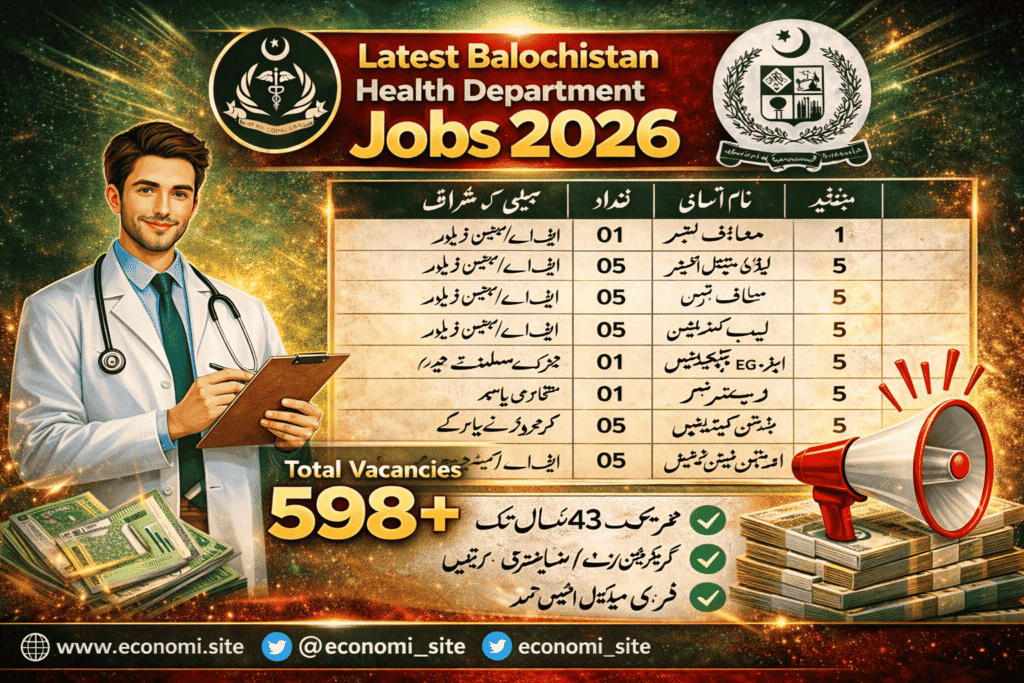
A fresh wave of temporary job openings has hit the Health Department in Balochistan, covering many technical, medical, and helper-level roles. For those trained and ready to work in health services, these spots could mean steady involvement in meaningful work. People from every part of the province are being asked to step forward if they meet the qualifications. Hospitals and clinics will soon welcome new hires such as lab assistants, nurses, medics, vehicle operators, attendants, along with others needed behind the scenes. While contracts form the base, the doors open wide for local talent seeking active duty in public care settings.
Hiring is underway to boost health care across various regions, bringing in certified pros along with experienced staff. Before time runs out, those matching the needed degrees and background should consider sending in their details. From hands-on clinical jobs to behind-the-scenes coordination tasks, openings cover a broad mix. People at all stages of training and know-how can find something that fits.
Available Job Openings
A broad set of jobs has been posted across various salary levels, says the public notice. Not just limited to one area, jobs stretch across units such as kidney treatment, operating theaters, and cardiac diagnostics. Starting out in anesthesia might lead you into intensive care work later on down the path. These positions make sure clinics stay functional when doctors handle procedures, checkups, or operations. Support staff step in wherever needed most – behind the scenes but always close at hand. What ties them together is hands-on aid where precision matters most behind the scenes.
Not just engineers are needed – nursing jobs too sit open, like Staff Nurse or Lab Assistant. What keeps clinics running often hides behind scenes: a technician preparing samples, an attendant guiding visitors. Care depends on these roles even when they stay unseen. Drivers move between buildings daily, carrying supplies or staff. Security guards hold shifts at entrances, part of the quiet backbone. Hospitals lean on this mix – clinical work paired with steady logistics. Each position plugs into a larger rhythm, different tasks feeding one purpose.
From BPS-01 up to BPS-14, job openings welcome applicants holding just school certificates along with others who’ve earned trade diplomas or work-specific credentials. With set numbers assigned per role, plenty of people stand a chance to land one of these posts.
Technical and Medical Jobs
What stands out about this hiring round? A number of niche tech roles are opening up in health services. Take the Anesthesia Technician position, graded BPS-14 – applicants need formal education in medical tech plus hands-on experience with anesthetic tools and methods. When operations happen, these workers support anesthetists directly. Their presence helps keep patients stable throughout procedures.
Health checks need skilled helpers too. People trained in reading heart rhythms are being hired to watch how hearts beat. Machines that clean blood when kidneys fail require careful handling by dedicated staff. Inside surgery rooms, another group makes sure tools are ready and hands support doctors mid-operation. Each role fits where medical care demands precision day after day.
From time to time, roles like ICU Tech show up, alongside Medical Technicians or those working in labs and X-ray units. Running machines falls on their shoulders, plus they carry out tests that guide patient care. Finishing a course at an approved school matters, just as much as having hands-on work behind them. Most who land these jobs hold certificates and have spent real hours in clinics or hospitals doing the tasks.
Nursing and Healthcare Support Jobs
Alongside tech roles, the job posting features openings in nursing and patient care. Women trained as medical technicians join staff nurses and helpers on hospital teams. Doctors get backup from these workers during treatments. Watching over patients falls into their daily tasks. Giving medicines is part of what they handle. Patient files stay updated through their work.
Folks in scrubs keep things running when hospital lights are on, seeing faces up close while guarding well-being. When seconds count or schedules tick, they stand beside physicians during checks, crises, even daily rounds. What it takes? A certificate in nursing – or something similar – paired with genuine concern for those under their watch.
A helper in a hospital might be called a healthcare assistant or maybe a medical attendant – both names show up when jobs open. When the team needs extra hands, these roles get filled fast. One moment they’re setting tools ready for procedures, next thing they’re moving someone on a bed down the hall. Clean floors, tidy rooms – that falls to them too. Keeping things running quietly behind the scenes matters just as much as front-line work.
Administrative and Support Staff Jobs
Not just for medical folks, the ad opens doors for those eyeing hands-on jobs in health settings. Think drivers moving fast between departments, ward assistants keeping rooms ready, guards watching entrances, or others who keep things running behind the scenes. Without them, daily hospital work would hit delays, stumble, fall apart.
Now comes the driver, behind the wheel of company vans, moving through schedules that include shuttling clinic workers from place to place. When alarms sound, they might shift into helping carry stretchers, stepping in where urgent rides are needed. Over on the floor, ward helpers guide patients between rooms, their hands steady during transfers. Clean floors, tidy beds – these tasks fall to them, done without fuss. Alongside nurses, they appear whenever extra eyes or arms make a difference, simply part of how things move.
Not every job inside a hospital needs years of study. Some people keep things running by handling waste, lending hands where needed, or doing everyday tasks behind the scenes. These jobs might not ask for degrees, yet they hold up daily operations just the same. Without them, cleanliness could slip, order might fade, risks would grow. Quiet work often keeps patients safe in ways most never notice.
Eligibility Criteria and Age Limit
Getting a position here starts by seeing how well your background matches the listing. Most openings go to residents of Balochistan who also meet the education requirement tied to the specific post. For technical jobs, a diploma or certificate from an approved school is needed instead of just any training. Support roles might ask less on paper – basic education helps, but past work matters too. Younger than eighteen? Most jobs won’t accept your form. Older than forty-three? Same rule applies, generally speaking. Government guidelines set those boundaries clear. Still, some regions adjust the cutoffs – depends on local policy. Paperwork matters just as much. Bring proof you finished school. Show where you live through a domicile slip. Hand over the official ID issued by the state. Other papers might pop up too – have them ready when applying.
Getting past the first check means hitting every mark on the list – miss one detail, even a small one, then the whole thing could fall apart before it’s reviewed. A single gap might mean being left out when decisions are made.
Application Process
Got a spot open? Then follow what the job notice says. Start by completing the form they want you to use. Toss in your school papers – photocopies work fine. Don’t forget where you’re from; add that domicile proof too. A copy of your national ID goes here as well. A new picture works best – taken within half a year, about the size you’d use for a passport.
Filled-out applications reach the assigned department before the cutoff time shown on the alert. No late entries considered, ever. Check if you qualify, make sure every paper is included, then send it in.
Once applications are in, some people get picked to move forward. Those chosen might face exams, talks with staff, or tasks that check their abilities. What happens next depends on what the job needs. Each step fits the kind of work being hired for.
Selection Procedure
A fresh look at how hires are made shows steps guided by official rules, done openly every time. Those who make the first cut get a message asking them to come in for talks or tryouts – moments when what they know, can do, and have lived through gets checked closely. When the job needs tech skill, another layer appears: real-world handling of tools and health-related methods might shape the outcome.
Who gets picked comes down to skill, fit, test results. Those moving forward get a letter, placed where help is needed – hospitals, clinics, care centers. Wherever the gap shows up.
FAQ’s
1. Last chance to submit applications – when does it close?
Submitted forms need to reach the office by the deadline listed in the announcement. Any that arrive late – missing parts included – won’t make the cut. Applications turn up after the cutoff? Automatically set aside.
2. Who can apply for these vacancies?
Folks living in Balochistan might be eligible if they’ve got the right education, enough experience, also fit the age rules for the job.
3. Need any papers along with your form? What exactly must go together?
Copies of your CNIC should sit alongside the application. A domicile certificate needs to be included too. Educational documents come next in line. Experience proof gets added only when necessary. Passport-style photos tag along at the end. All these pieces travel together with the form.
4. How will candidates be selected?
Sometimes those who qualify get picked for a test or talk. From there, picks happen by how well someone does, what they know, their background matters too. Success depends on results shown when it counts.