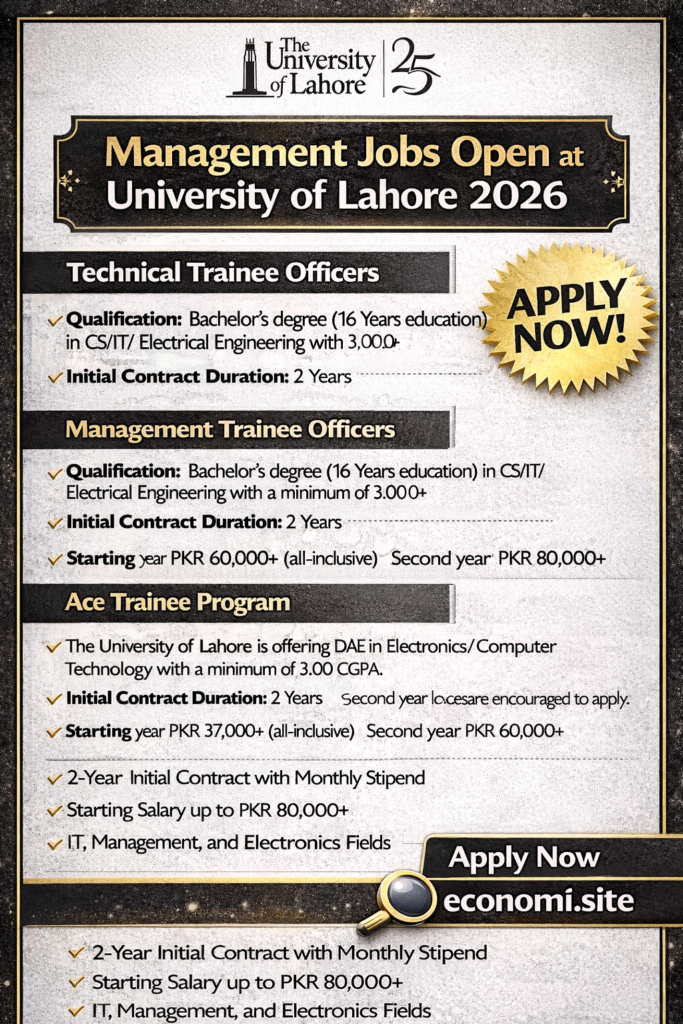
Out in front of recent developments, Pakistan’s higher education landscape keeps growing, offering varied job paths for newcomers and recent degree holders. Not far behind, The University of Lahore steps forward – a key player among private universities, recognized for strong academics, up-to-date facilities, while matching courses to market needs. Into the picture comes fresh news: leadership roles have opened up, shared via a notice in Daily Jang dated 22 February 2026.
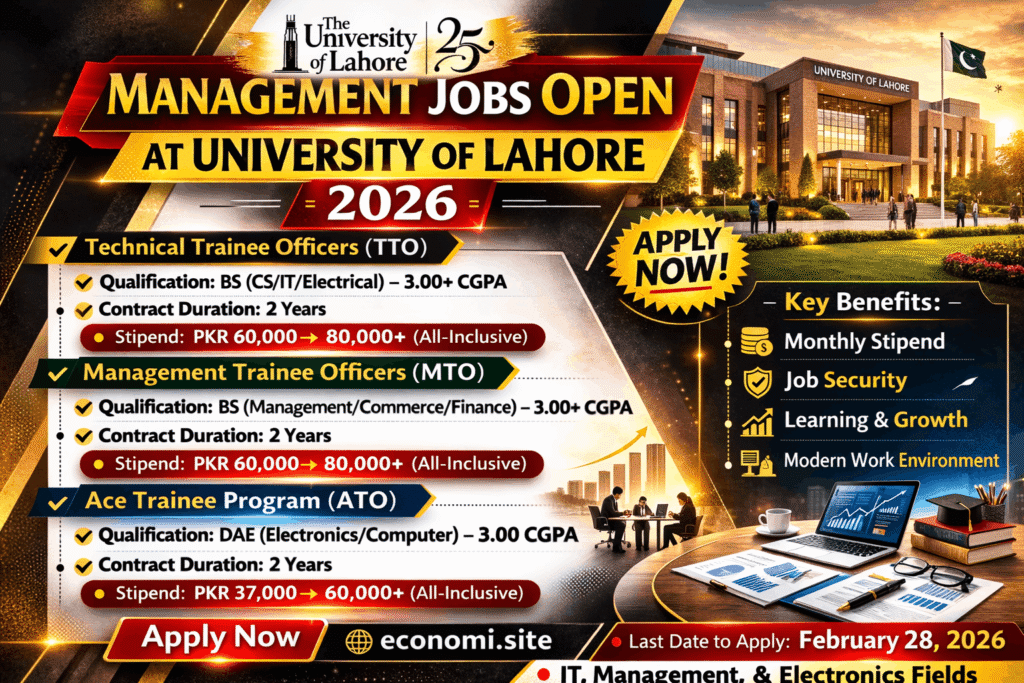
Right now, openings are showing up for the Technical Trainee Program along with the Management Trainee Program – both based at the university’s Defence Road spot in Lahore, Punjab. For people who want clear growth paths without guesswork, these roles fit well inside an ever-moving school setting.
University of Lahore Overview
From the start, it was clear – this place wanted to deliver solid university-level learning. Over time, what began simply now covers many fields: think engineering mixed with management, health tied to tech, alongside social sciences too. Spread out across several spots in Pakistan, each location serves students differently. Yet when decisions happen or classes feel busiest, eyes turn to Lahore it pulls most of the weight.
One reason people look to UOL is how it pushes new ideas through research while working closely with companies. Starting a journey there often means joining training that builds real-world abilities, slowly shaping future leaders by placing them where work happens every day.
2026 Management and Technical Trainee Program Details
A fresh batch of openings has arrived, built around shaping tomorrow’s experts via step-by-step skill building. One path leans into leadership growth, while the other sharpens deep technical ability. These routes connect classroom ideas to real-world work demands in clear ways. Each opportunity lines up learning with actual job needs from day one.
1. Management Trainee Program
Every now and then, a fresh graduate shows up who actually fits what the university needs for office work and oversight jobs. These folks get picked for something called the Management Trainee Program. Through it, they move around – spend time here, shift there – not stuck in one spot. Places like finance, student services, facilities, even IT might come into play during their turn. Each stop teaches them how parts of the system talk to each other. The whole thing runs on experience, not theory. Learning happens while doing, not watching
Human Resource Management
Finance and Accounts
Getting in and looking after students
Marketing and Communications
Academic Coordination
Spinning through different roles gives learners a full picture of how organizations work, yet sharpens their ability to solve issues, speak clearly, sometimes lead. A fresh angle each time keeps thinking flexible, builds confidence without spelling it out, shapes judgment slowly. Moving around teaches more than staying put ever could.
2. Technical Trainee Program
Not everyone gets a chance like this one. Those with skills in tech might find themselves helping keep things running at the university. Work could take place across different spots on campus where systems need attention. Some spend time fixing networks, others handle software setups. Each role ties into how the school operates day to day. Experience builds slowly while tackling real tasks. People come in with knowledge – they leave with more
IT and Network Administration
Engineering Maintenance
Laboratory Support Services
Equipment Installation and Calibration
Facility Management
Fumbling through real tasks, trainees slowly build skill under guidance – this kind of learning sticks when chasing jobs at universities or big companies. Mentors nudge progress while actual work shapes ability beyond textbooks. Experience earned this way opens doors where degrees alone might stall.
Eligibility Criteria
Not just degree holders but folks with a DAE might stand out, per the ad. Still, picking someone isn’t only about paper – other things weigh in too
Strong academic performance
Effective communication skills
Basic computer proficiency
Problem-solving and analytical ability
Teamwork and adaptability
Those just finishing school should think about joining, since beginner roles are built to grow new professionals.
Why These Chances Are Important for New Grads
Starting fresh at a company often means standing out just to be noticed. Take The University of Lahore’s openings – these roles open doors that few entry-level paths do. Picture beginning your day with guidance, not guesswork. Newcomers gain real tasks, not busywork handed down from above. Support comes quietly, in moments when it matters most. Confidence builds without needing to fake experience. Each step forward feels clearer, somehow less overwhelming. These opportunities shape careers before they even begin
Professional Exposure
Out there on the job, trainees get to test what they’ve learned in class through actual daily tasks. One moment blends into another, where ideas meet reality without warning.
Skill Development
Pacing through tasks sharpens how people handle deadlines. Working alongside others builds smoother teamwork over time. Choices get clearer when thinking it through with peers nearby.
Networking Opportunities
Inside a major university, learners meet professors, staff, scientists, along with people from companies. Early contact builds paths later on.
Career Pathway
Fresh out of training, plenty land full-time roles when companies spot their fit over months of hands-on work. Talent often sticks around after proving themselves through real tasks day by day.
Work Environment at The University of Lahore
One thing stands out at the University of Lahore – it builds a work setting where people feel backed and able to move forward. Staff usually find that their day-to-day experience includes room to grow, along with steady encouragement. A sense of progress isn’t forced here; instead, it shows up through how teams interact and support one another. What matters most? The atmosphere allows individuals to stay engaged without pressure piling up. People tend to stick around, not because they have to, but because the environment fits
Modern facilities and digital infrastructure
Training workshops and professional development sessions
Collaborative academic atmosphere
Performance-based career growth
Exposure to diverse projects
Learning happens naturally when practice meets purpose. Growth shows up quietly through real tasks. Skills build step by step alongside daily work. Progress ties back to shared outcomes without force. Experience shapes ability over time, not theory.
Application Process
Those wanting to apply should stick to the usual hiring process described in the job post. Depending on the role, people generally must:
Start by reviewing your latest qualifications, then include any honors earned during studies. Show abilities tied directly to the role using clear examples from past experience. Update dates and institutions, making sure everything reflects current information accurately.
Attach copies of educational certificates and supporting documents.
Applications must go in using the method listed – either online, by email, or handed in person. The way it’s supposed to be done matters. Whichever path applies, follow that one exactly. Going off track isn’t an option here. Each route has its own rules, yet all lead to the same place. Done right, it moves forward without delay.
Stay ready assessments or interview invites might come soon.
Mistakes or missing pieces might get an application tossed aside. What matters most is getting every detail right the first time around. A full set of correct papers moves things forward without delay. Skipping checks could mean it simply does not count anymore.
Things to Think And About Before Applying
Start small might be the move that shifts everything. Routines tweaked just a bit can let progress slip through quietly. Standing out sometimes happens when you swap one habit, not ten. Old decisions revisited tend to crack open paths nobody saw before.
Prepare for Interviews
Start by looking at a company details. Get clear on what the trainee position involves. Then try answering behavior-based queries. Follow up with replies to skill focused one’s.
Career Path’s After Finishing
One step beyond classroom learning, finishing a training course at The University of Lahore opens clearer paths to work. Those who complete it usually find positions like:
Assistant Manager or Officer position’s
Technical Support Engineer or Specialists
Administrative Coordinator
Project Assistant
Facility or Operations Executive
Starting out strong at a well-known university often opens doors – into schools, companies, or government roles. What counts is how that background builds credibility over time, shaping paths without drawing attention. A solid foundation quietly makes a difference later on.
FAQ’s
1. Difference Between Management Trainee and Technical Trainee Programs?
A fresh look at training paths shows one track diving into office work – handling people matters, money tasks, brand outreach, student help desks. Meanwhile, another route leans hard on doing things: fixing tech gear, keeping machines running, backing science labs, making sure buildings function smoothly.
2. Trainee spots sit where exactly?
On the Defence Road campus in Lahore, Punjab, students can study either program at The University of Lahore. Though located centrally, both courses run separately across shared university grounds. One doesn’t replace the other – each keeps its own schedule within the same halls. Running side by side, they’re part of daily academic life on that site.
3. Could you stay on permanently once the trainee program ends?
It could happen. Strong performers in the training might move into permanent roles at the university – if openings exist and their progress checks out. Department demand plays a part too.
4. Applications arrive by email. Some send forms online instead. Others choose postal mail. Each picks a method. Submission options stay open until deadline?
Those looking to apply need to stick to the steps listed in the job ad from Daily Jang dated 22 February 2026 – whether it’s sending forms online, emailing materials, or handing in hard copies complete with academic records and a current resume. From there, each step unfolds as laid out. What matters is matching how they want things done.